BBQ Meats & Cuts Guide — Brisket, Picanha, Vacío, Ribs & More
Every major cut used in live fire cooking across the Americas — what it is, where it comes from, and how to cook it correctly.
Understanding Cuts Across Two Continents
American and South American butchery traditions cut the same animal differently. A US butcher breaks down a beef carcass into chuck, rib, loin, round, and brisket. An Argentine carnicero working the same animal produces asado de tira, vacío, entraña, bife de chorizo, and lomo. Understanding both systems means you can work with any beef tradition on the continent.
Beef Brisket — The American BBQ Standard
Brisket is the pectoral muscle of the cow — one of the most heavily worked muscles on the animal, which means enormous amounts of collagen and connective tissue. Raw, it is tough. Cooked wrong, it is dry and chewy. Cooked correctly — 12-18 hours at 225-250°F — the collagen converts to gelatin and the result is the defining product of Texas BBQ. The flat is lean and slices cleanly. The point is fatty and produces burnt ends. Buy a whole packer (flat + point together) whenever possible.
Picanha — Brazil’s Centerpiece
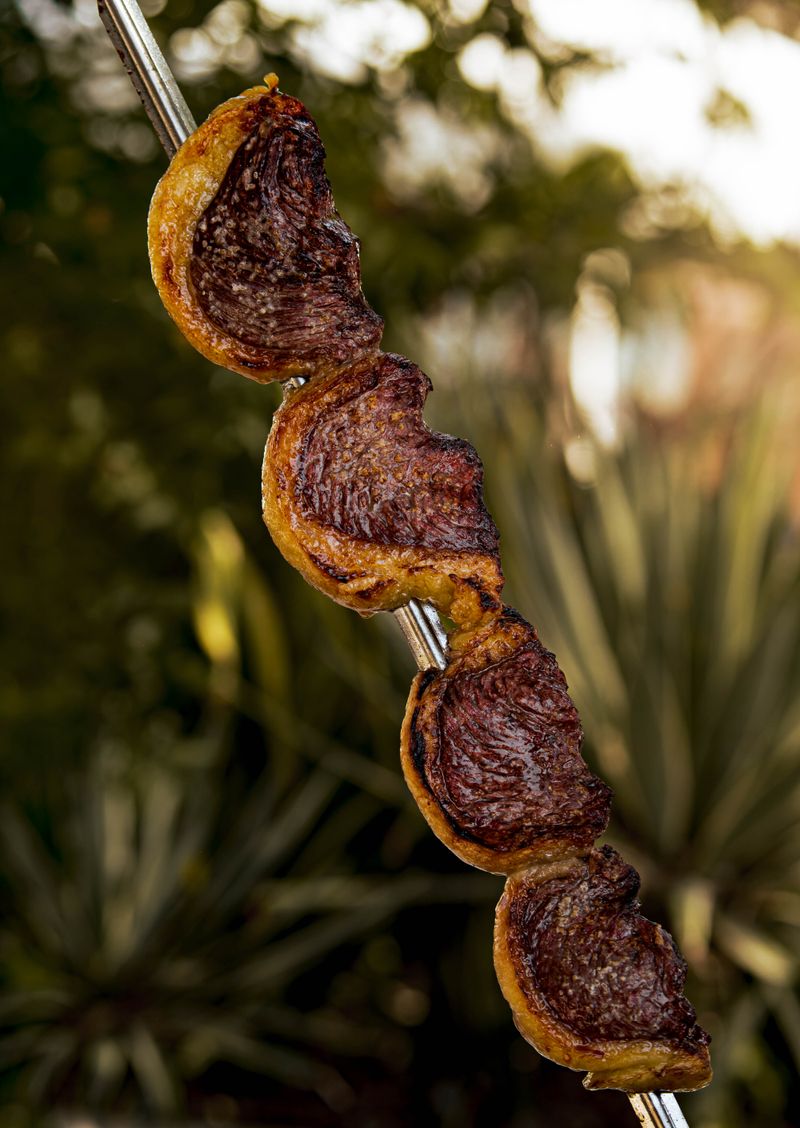
Picanha is the rump cap — the muscle that sits on top of the sirloin, with a thick fat cap that must remain intact for cooking. In Brazil it is cooked on the espeto (metal skewer) over charcoal with sal grosso (coarse sea salt) only. The fat cap renders slowly and bastes the meat throughout the cook. In the US it is often sold as “top sirloin cap” or “culotte” — ask your butcher specifically for it with the fat cap on, trimmed to ½ inch. A 2.5-3 lb picanha serves 4-6.
Vacío — Argentine Flank
Vacío is the flank or flap meat in Argentine butchery — but it is not the same as American flank steak. It is thicker, fattier, and encased in a layer of fat on one side that crisps magnificently on the parrilla. Vacío is cooked low and slow over indirect heat for 2-3 hours, fat-side up, until the exterior fat is caramelized and the interior is pink and juicy. It is one of the great underrated cuts in the Americas.
Asado de Tira — Short Ribs, Argentine Style
Asado de tira are beef short ribs cut across the bone into thin strips — perpendicular to the rib bones rather than parallel. Each strip is typically ½ to ¾ inch thick and contains 3-4 sections of bone. They are cooked directly on the parrilla over medium heat for 30-45 minutes, flipped once. The cross-cut exposes the marrow and creates more contact between meat and grill. These are the most iconic cut of the Argentine asado.
Entraña — Skirt Steak
Entraña is the inside skirt steak — the diaphragm muscle of the cow. In Argentina it is cooked fast over high heat, served medium-rare, and is one of the most flavorful cuts on the animal due to its high fat content and loose grain. In Mexico the same cut becomes the foundation of carne asada. In both traditions the key is high heat, short cook time, and cutting against the grain.
Pork Shoulder — The American Pulled Pork Standard
Pork shoulder (Boston butt) is the upper portion of the front leg — a heavily worked muscle with high fat and collagen content. At 195-205°F internal temperature, the connective tissue converts to gelatin and the muscle fibers separate easily — this is “pull” temperature. Carolina pulled pork (whole shoulder, eastern vinegar sauce), Memphis pulled pork (bone-in butt, dry rub), and Kansas City pulled pork (thick tomato sauce) all start from the same cut.
Every Cut. Both Continents. All Six Traditions.
From Texas brisket to Argentine vacío to Brazilian picanha — 79th Street BBQ covers every cut used in live fire cooking across the Americas.
Browse All Cuts Guides → BBQ Techniques →